Variable Resistor Rheostat: How It Works and How to Size It - Google Drive
A rheostat is a variable resistor. But not every “variable resistor” is a rheostat in the way people mean it on the shop floor. Most of the time, the label gets used as shorthand for “that knob that changes something.”
That’s fine until the part is actually sitting in series with a load and starts doing what rheostats do best: dropping voltage and turning power into heat.
In this post, you’ll learn how to tell the terms apart, identify when you’re dealing with a true rheostat use case, and choose the right rating so the replacement doesn’t drift, run hot, or fail early.
Key Takeaways
A variable resistor is the umbrella term for parts that provide adjustable resistance.
A rheostat is a two-terminal, series-resistance device used to change current and create a voltage drop.
Most failures come from undersizing the wattage. Check thermal margin and duty cycle before you match the ohms range.
If the circuit needs an adjustable signal or setpoint, you may be looking for a potentiometer-style use case instead.
What does “variable resistor” mean?
A variable resistor is any resistor you can adjust intentionally. You turn a shaft, slide a tab, or drive it with a motor, and the resistance changes.
You’ll find variable resistors anywhere a circuit needs an adjustable setting. Common examples include control panels, calibration points, test setups, and older equipment with manual tuning knobs.
The key point is scope: “variable resistor” is a category, not a single part. A rheostat and a potentiometer can both fall under that label. The circuit’s job tells you which one you are dealing with.
What is a rheostat? How it works inside the circuit
A rheostat is an adjustable resistor that you use in a two-terminal role when you need a controllable amount of resistance in a circuit path. It’s commonly used in legacy and retrofit setups where the original design relies on adjustable resistance rather than an electronic controller.
How it works
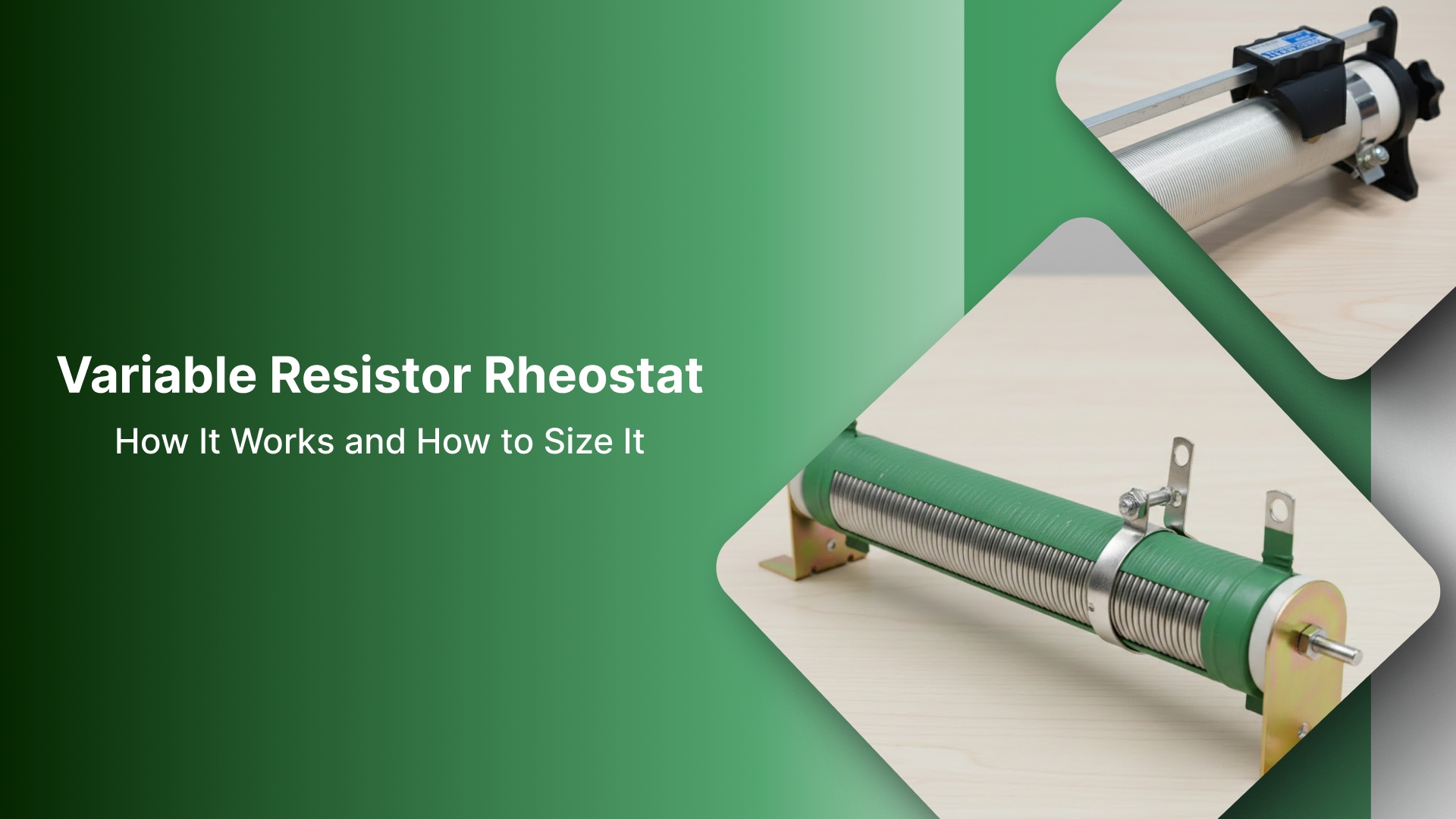
Inside the body, a moving contact rides along a resistive track. When you rotate the shaft or slide the actuator, you change the contact point on that track. That changes the effective resistance seen by the circuit. As the resistance changes, the circuit operating point shifts with it, and the rheostat takes a share of the electrical load as dissipation.
Quick clarification: “variable resistor” is the broad label for adjustable-resistance parts. A rheostat refers to the two-terminal use case. A potentiometer is typically used as a three-terminal divider for an adjustable signal, even though it can be used in a two-terminal role in some cases.
How to choose the right rheostat
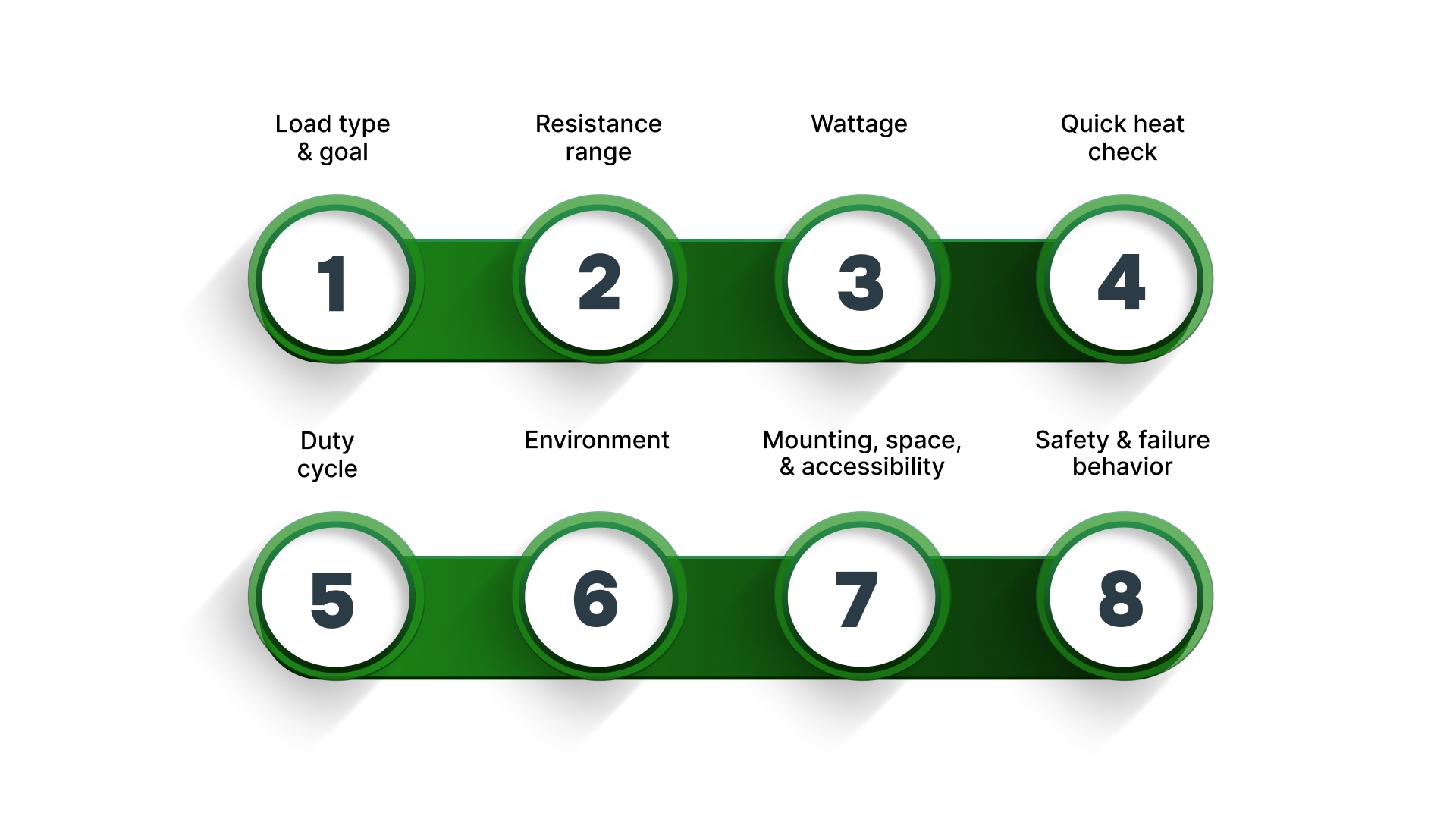
This checklist prevents the most common “it worked briefly, then failed” replacement problems.
Load type and goal: Define the job. Are you limiting current through a load, or making a fine adjustment in a control circuit? If this is truly a signal trim, a rheostat may not be the best fit.
Resistance range (ohms): Pick a range that gives useful control where the system actually runs. If the adjustment only feels effective at one end of travel, the range is likely mismatched.
Wattage (thermal margin): Size for worst case, not typical. In series use, the rheostat must handle heat under load. If the rating is tight, expect drift and shortened life.
Quick heat check: in the worst case, estimate dissipation using P = I²R or P = V_drop × I. If your estimate is close to the rheostat’s watt rating, choose a larger margin.
Duty cycle: Continuous load is very different from occasional setup adjustment. Continuous duty needs more margin.
Environment: Dust, oil mist, humidity, and vibration increase wear and instability. Plan for the conditions the component will actually see.
Mounting, space, and accessibility: Make sure there is enough space for safe wiring clearance and airflow. Also consider whether accidental bumps could change the setting.
Safety and failure behavior: Think through what happens at extremes and during wear. If the wiper goes noisy or intermittent, does the system move in a safe direction?
Fast decision cues
If it’s in series with a load, prioritize wattage and thermal margin first.
If it’s mainly fine trim, prioritize stable adjustment and repeatability.
If it’s adjusted often, plan for mechanical protection to prevent accidental changes.
If it’s in a hot enclosure, plan for extra wattage margin.
If you take nothing else from this checklist, take this: get the thermal margin right first, then match the ohms range and the mechanical fit.
Common applications and where a rheostat is the wrong tool
Rheostats remain useful because they are straightforward. But they are not the best answer for every control problem.
Where rheostats still make sense
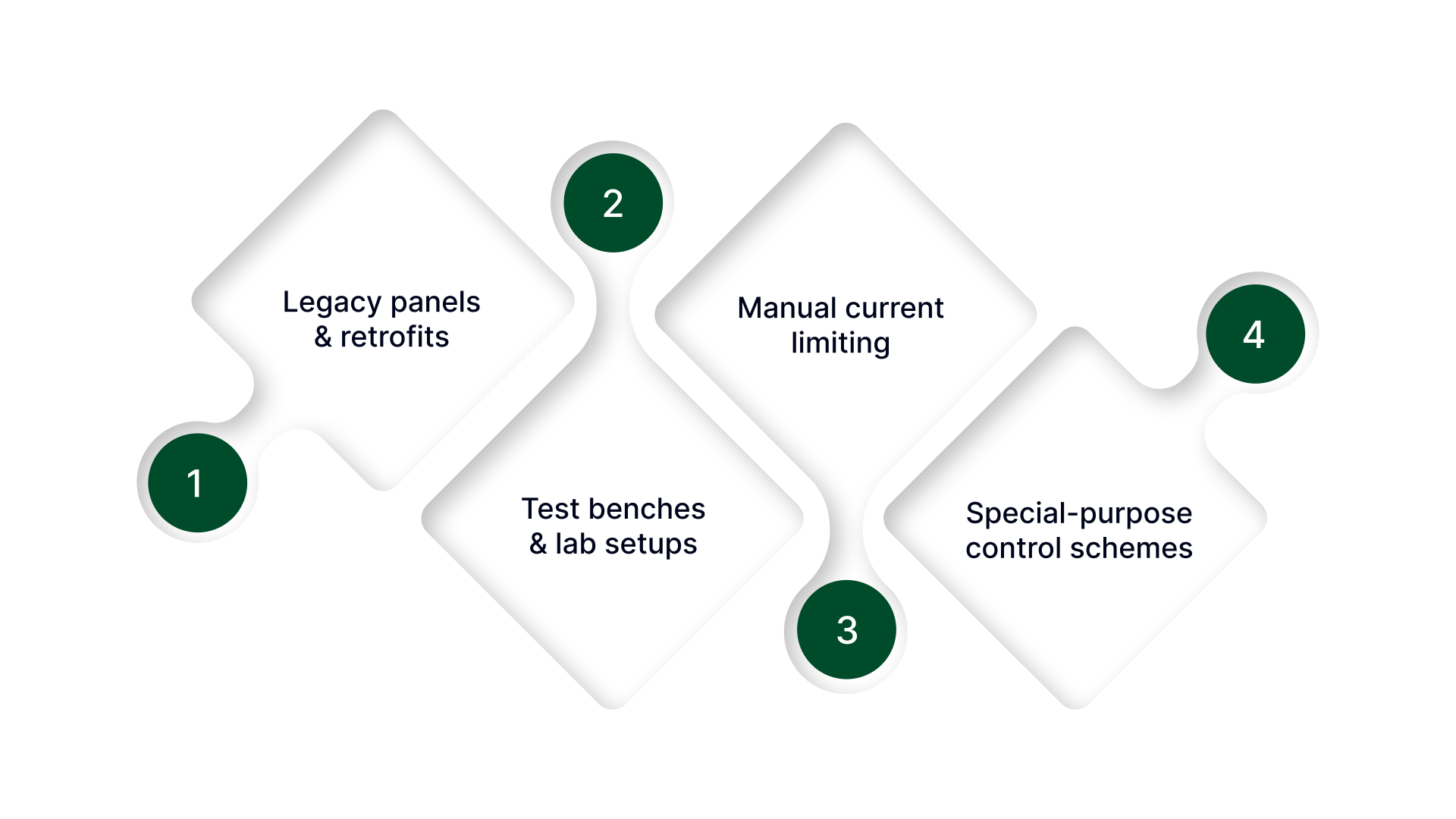
Legacy panels and retrofits where the original design expects variable resistance in series.
Test benches and lab setups that need a quick, adjustable current limit or load effect.
Manual current limiting in non-precision scenarios where efficiency is not the priority.
Special-purpose control schemes designed around resistive control with adequate thermal margin.
Where a rheostat is usually a poor choice
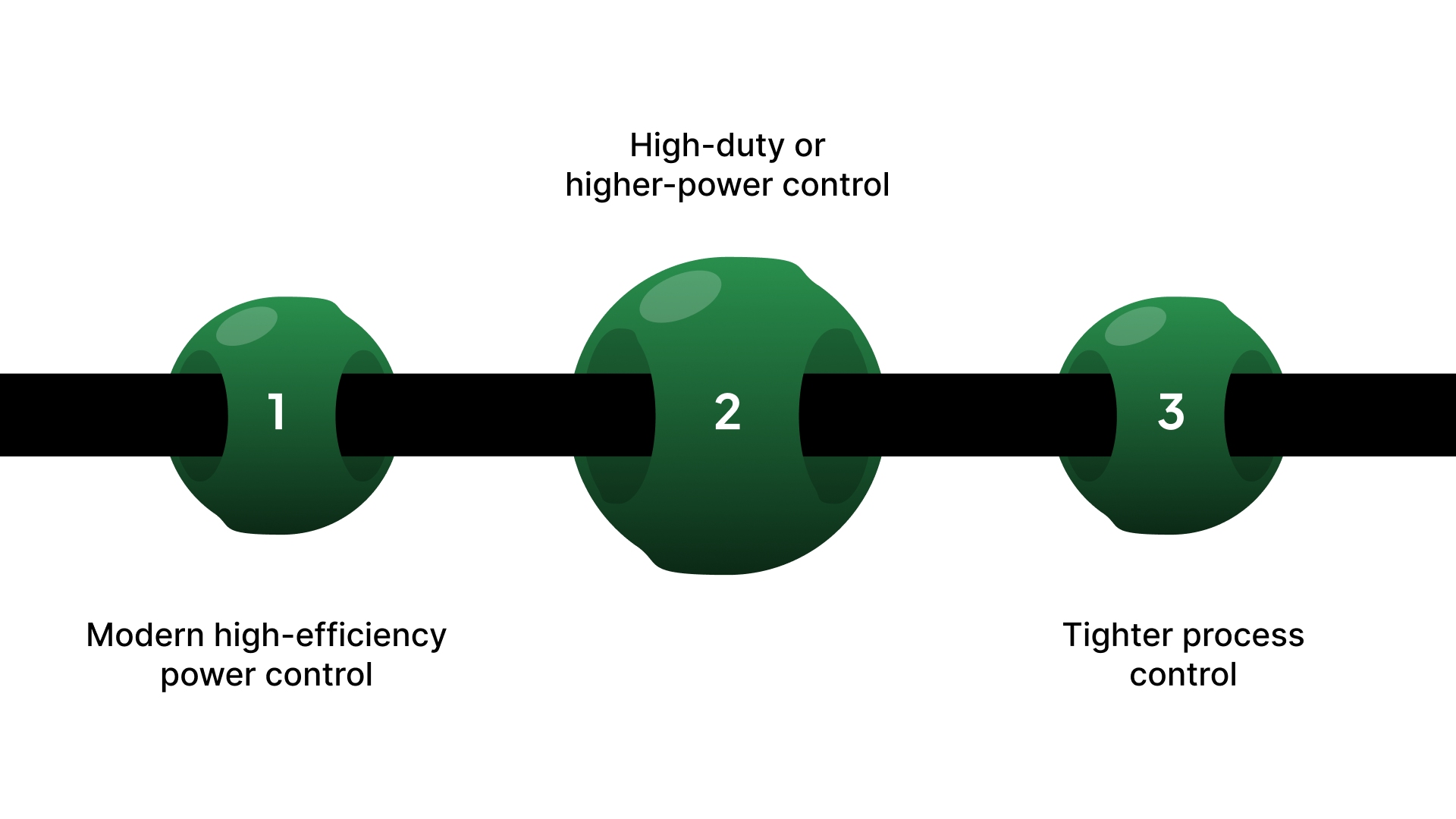
Modern high-efficiency power control for motors, heaters, and lighting, where switching or drive-based methods are typically used.
High-duty or higher-power control where heat load, space, and reliability become limiting factors.
Tighter process control that demands repeatability and stable behavior under varying load conditions.
If normal operation requires the rheostat to run hot, treat it as a thermal design decision. If you cannot size and cool it with a margin, it is usually the wrong tool.
Common mistakes
These are the issues that most often show up when a rheostat is replaced or repurposed without checking real operating conditions.
Mistake | What happens | Quick fix |
|---|---|---|
Choosing by ohms only | The rheostat “fits” but runs hot, drifts, or fails early | Size for wattage/heat first, then match the ohms range |
Underestimating wattage/heat | Overheating, unstable performance, shortened life | Use worst-case dissipation and leave thermal margin |
Assuming any “knob resistor” works | Same form factor, different behavior under load | Match the type, rating, and intended circuit role |
Expecting efficient power control | Wasted power and excess heat | Use a rheostat only where the design can tolerate the heat load |
Ignoring environment/vibration | Noisy adjustment, intermittent behavior, faster wear | Choose appropriate construction and protect from contaminants/vibration |
Avoid these mistakes, and you are far more likely to get a rheostat that holds its setting, stays within limits, and lasts longer in the field.
Motorized rheostats: when a manual knob isn’t enough
A motorized rheostat makes sense when the adjustment has to be repeatable and controlled, not “whoever is standing at the panel.” It also helps when the rheostat is in a hard-to-reach enclosure or when the setting needs to be changed during operation without opening the door.
Common cases include:
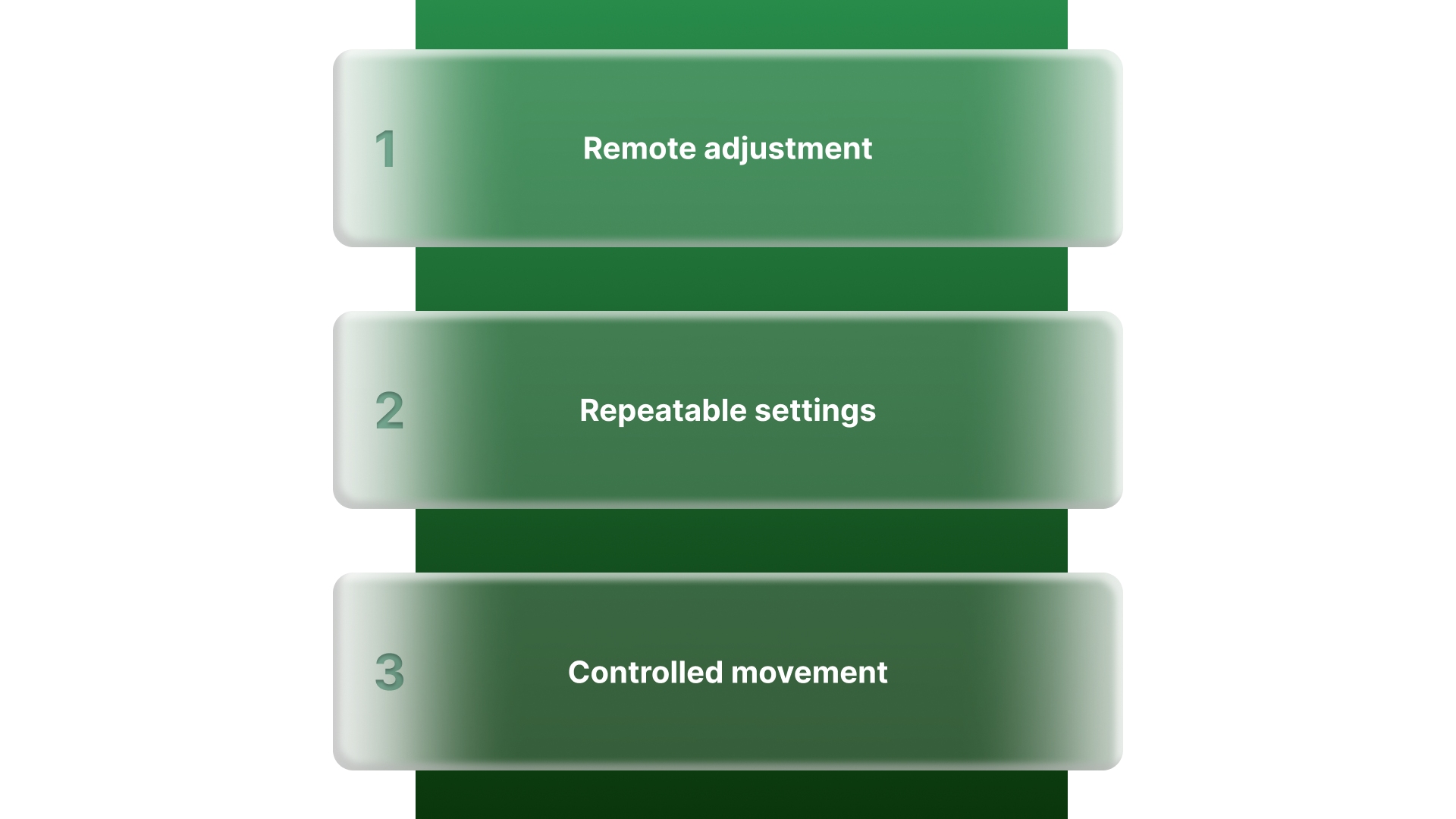
Remote adjustment to keep panels closed and reduce downtime.
Repeatable settings for changeovers and standardized setups.
Controlled movement so the setting changes predictably instead of by hand.
If you are already using a rheostat in series and it works for the application, motorizing it is often the cleanest way to remove operator variation without redesigning the entire control scheme.
Why On Line Controls is a strong choice for motorized rheostats
When you motorize a rheostat, the goal is not just “make it move.” The goal is stable operation under load, consistent adjustment, and a build that holds up in an industrial panel.
On Line Controls focuses specifically on motorized control hardware for real equipment and retrofits. The motorized rheostats are offered in common industrial wattages such as 25W, 50W, and 100W, which helps you match the thermal requirement instead of forcing a light-duty part into a load path.
If you are replacing a legacy unit, this product's focus also matters because it increases the odds of finding a configuration that fits your mounting, adjustment needs, and operating conditions.
If this is a retrofit, grab the part number (or take a quick photo) and review On Line Controls’ motorized rheostat options to find the closest match.
If you want help narrowing the right configuration, reach out to us with what you have and what the circuit is doing.
Conclusion
In short, “variable resistor” is the umbrella term, and a rheostat is the series, two-terminal use case people usually mean when they say it on the shop floor. The practical selection rule is simple: size for wattage and thermal margin first, then match the ohms range and the environment the part will live in.
And if the setting has to be repeatable or adjustable without opening a panel, motorized options can remove operator variation without changing the core control scheme.
FAQs
Is a rheostat the same thing as a variable resistor?
A rheostat is a type of variable resistor. “Variable resistor” is the umbrella term. “Rheostat” usually means the two-terminal, series-resistance use case for current control.
What is a rheostat used for?
It is used to add adjustable resistance in series with a circuit. That lets you limit current or change the voltage drop across a load in a controlled way.
How does a rheostat control current?
When you increase resistance in series, current decreases. When you decrease resistance, current increases. The rheostat changes the resistance as you move the wiper across the resistive element.
How do I choose the wattage rating for a rheostat?
Estimate worst-case power dissipation and select a rating with margin. You can estimate dissipation using P = I²R or P = V_drop × I at the worst case. If the estimate is close to the rating, choose a higher wattage or change the approach.
Can a potentiometer be used as a rheostat?
Sometimes. A potentiometer can be used in a two-terminal role, but you must confirm it can handle the current and dissipation, and you should consider failure behavior if the wiper becomes intermittent.