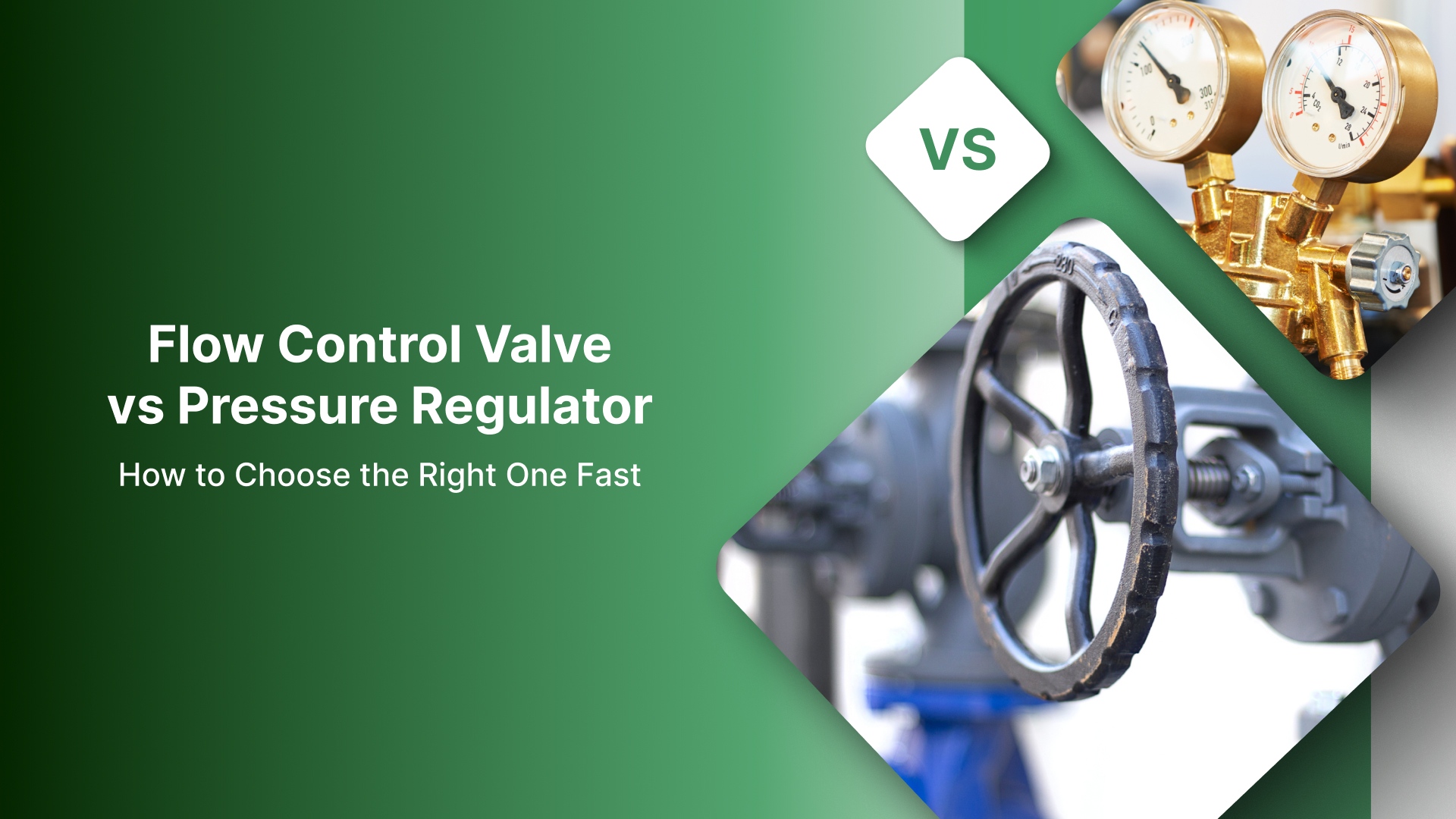
Flow Control Valve vs Pressure Regulator: How to Choose the Right One Fast - Google Drive
A stuck process doesn’t announce itself with a label. It shows up as a drift. A surge. A line that “just won’t hold.” And the quickest way to waste an hour is to treat every air or fluid issue like it’s the same problem.
Turn the wrong knob, and you can make the system look stable for a minute, then watch it swing right back.
This is the clean split: a flow control valve manages how much moves. A pressure regulator manages how hard it pushes. Mix them up, and you end up chasing symptoms. In this post, we’ll draw the line fast, then show you how to choose the right device for the job.
Key Takeaways
A flow control valve limits or sets the flow rate. It mainly changes speed or timing by restricting flow.
A pressure regulator maintains a target pressure downstream. It reacts to pressure changes and compensates within its limits.
The confusion happens because flow and pressure affect each other. Restricting flow and pressure can change. The change in pressure and flow can change.
Use a flow control valve when you need to tune speed, timing, or rate.
Use a pressure regulator when you need a stable force, clamping pressure, downstream pressure, or protection for sensitive equipment.
Key differences at a glance
If you only read one section, use this table to decide what problem you’re solving.
Device | Controls | Best use cases | Common mistake |
|---|---|---|---|
Flow control valve (needle valve/flow restrictor) | Flow rate (rate of movement) | Speed and timing control, rate limiting | Used to “set pressure,” then performance shifts when conditions change |
Pressure regulator | Downstream pressure (setpoint) | Stable force/clamping, consistent downstream/process pressure, protection | Expected to “set flow” without any metering/restriction device |
Don’t confuse with… control valve/pressure control valve | Control-loop variable (system-dependent) | Automated control via PLC/PID | Treated like a simple knob-based regulator/flow device |
What each one responds to (quick add-on, so nothing is lost):
The flow control valve responds to your adjustment, plus the downstream resistance/load.
The pressure regulator responds to downstream pressure feedback and corrects toward the setpoint.
Control valves respond to an external controller signal (not self-acting like a regulator).
A flow control valve is a controlled restriction. You set how much flow can pass, which changes speed or timing. It does not hold pressure steady when demand shifts.
A pressure regulator is a self-contained pressure controller. You set a target pressure, and it modulates to keep downstream pressure near that value as conditions change, within its limits.
Why people confuse them (and why symptoms mislead)
The confusion starts because both devices can change what you see on a gauge and what you feel at the actuator. A system that “won’t hold” might be a pressure stability issue, or it might simply be starved for flow at the point of use.
Here’s the key interaction in plain terms:
When you restrict flow, you create a larger pressure drop across that restriction. That can make downstream pressure look worse under load, even if the regulator setting never changed.
When demand changes (a cylinder cycles faster, another branch opens, or a load increases), the system’s pressure and speed can shift because the available flow and pressure losses in the line change accordingly.
A quick example: a line can show acceptable pressure at idle, then sag when a valve opens and flow starts. If you “fix” that by opening a needle valve, you may get speed back, but still lack consistent force. If you “fix” it by cranking regulator pressure, you might mask a flow bottleneck until the next demand change.
The practical takeaway is simple: pick the device based on what must stay stable. If the priority is consistent pressure/force, start with regulation. If the priority is consistent motion speed or rate, start with flow control.
Which One Do You Need? A Quick Selection Checklist
Start with the outcome you need to keep stable. Then work backward.
What is your real goal?
Stable speed/actuation time or stable force/pressure?
Is the load changing or fixed?
If downstream demand varies (cycling actuators, multiple branches, changing restrictions), you need a setup that behaves well under changing conditions.
Is the supply stable or fluctuating?
If upstream pressure swings, your “set flow” or “set speed” can drift unless the system is designed to absorb that variation.
Do you need stable control at low pressures?
Low-pressure work is where poor regulation shows up fast. Small changes become noticeable.
Do you need both devices?
It’s valid when you need stable pressure and a controlled speed/rate at the point of use.
Decision guide
Choose a flow control valve when…
You are tuning speed, timing, or rate.
The main problem is “too fast/too slow,” not “can’t hold pressure.”
You want a simple way to limit flow at the actuator or process point.
Choose a pressure regulator when…
You need a stable force, clamping pressure, or a consistent downstream pressure.
The process is sensitive to pressure changes, even if the flow varies.
You are protecting downstream components from excessive pressure.
Use both when…
You need a stable pressure feeding the circuit and a controlled speed/rate downstream.
Demand changes are common, and you still need repeatable behavior.
You want to set a safe working pressure, then tune motion or rate separately.
If you answer these questions first, the decision usually becomes obvious, and you avoid “tuning” one knob to compensate for a problem the other device was meant to solve.
Common Configurations: Regulator, Flow Control, or Both
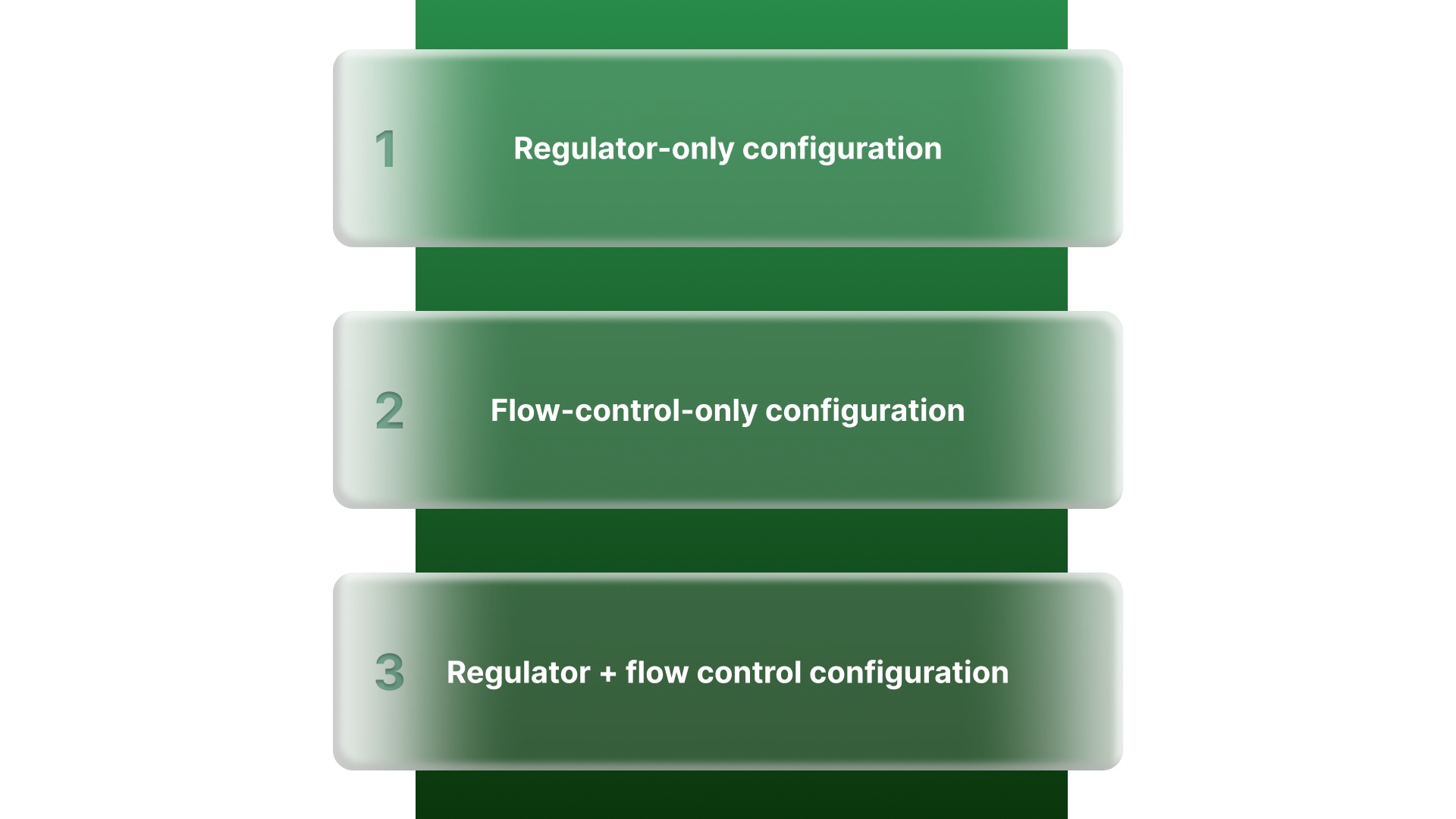
This section is not about picking a device. It’s about what changes once the device is in the system and how to tune without creating new problems.
Regulator-only configuration (pressure-first systems)
A regulator-only setup is built around one priority: keep downstream pressure consistent. Once the setpoint is established, downstream behavior should stay predictable within the regulator’s capacity. If performance changes mainly when demand increases, the issue is often capacity or supply variation, not “more restrictions.”
Flow-control-only configuration (rate-first systems)
A flow-control-only setup is built around one priority: shape the rate of movement or delivery. It works best when upstream pressure is already acceptable and reasonably steady. If the same adjustment gives different results at different times, the cause is often changing supply pressure or load, not the valve “going out of tune.”
Regulator + flow control configuration (pressure + rate separated)
This is the most useful combo when you need both outcomes:
The regulator sets the operating pressure (force/protection).
The flow control valve sets the speed or rate.
Tuning order matters: set the regulator to the correct working pressure first. Then adjust the flow to get the motion or rate you want. If you do it in reverse, you can end up compensating for the wrong variable.
Quick diagnostic cue: if you change flow and force changes a lot, pressure is not being managed well. If pressure looks fine but speed still wanders, you likely have a flow limitation or demand swing somewhere in the circuit.
Common mistakes to avoid
These are the most common ways teams end up with unstable results even after “everything is adjusted correctly."
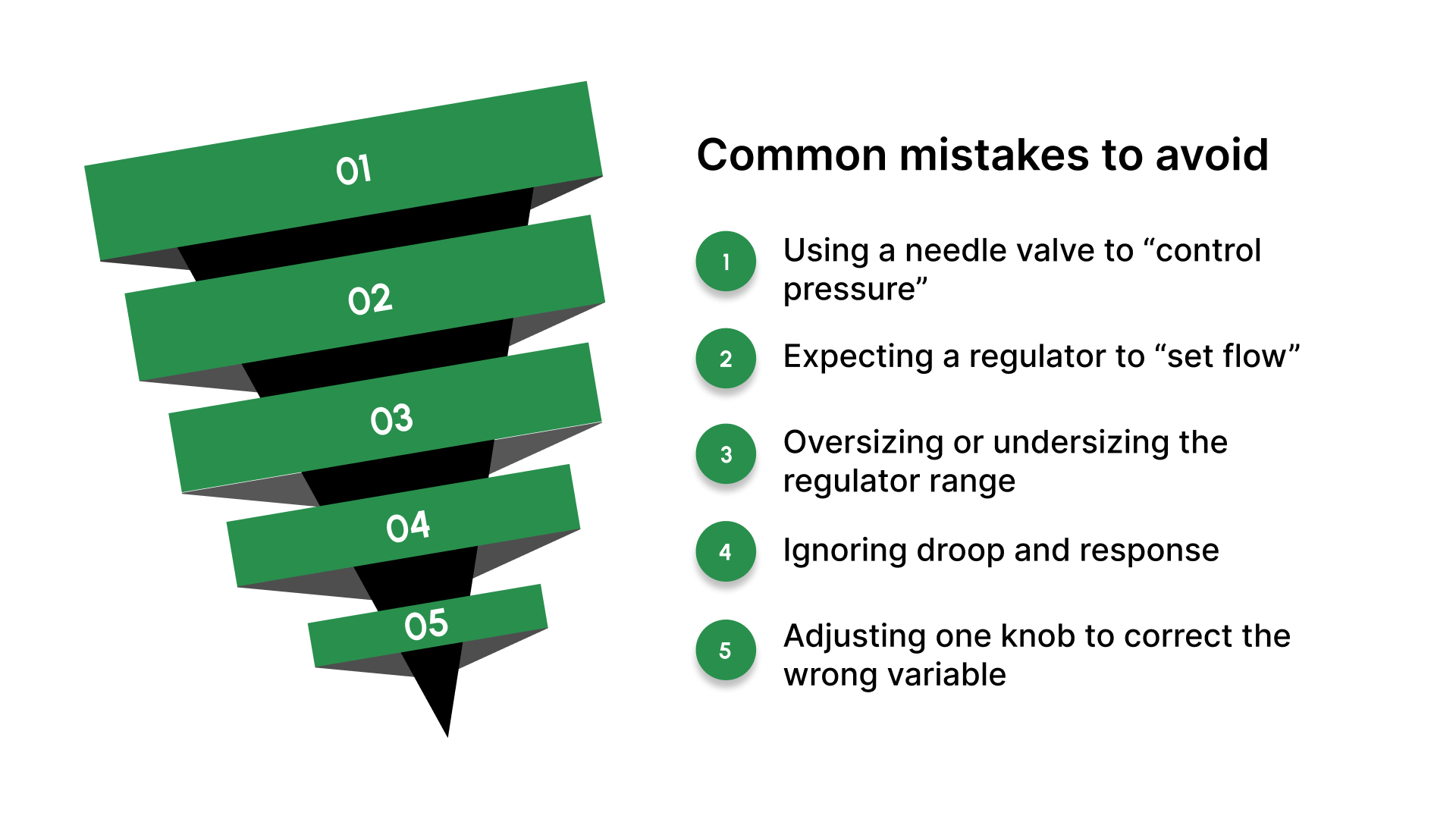
Using a needle valve to “control pressure”.
A needle valve can change what you see downstream, but it does not regulate. As conditions shift, the result shifts with them.
Expecting a regulator to “set flow.”
A regulator targets pressure. The actual flow depends on demand and downstream restriction.
Oversizing or undersizing the regulator range
A poor range match makes adjustment touchy or ineffective, especially in low-pressure applications where small changes are noticeable.
Ignoring droop and response
If pressure falls off when demand rises, that behavior may be normal for the regulator’s capacity. Do not assume the valve “caused” it.
Adjusting one knob to correct the wrong variable
If the symptom is rate-related, pressure changes can mask it temporarily. If the symptom is pressure-related, restricting flow may hide it until the next demand change.
Avoid these, and troubleshooting gets faster because each adjustment is tied to the variable it actually controls.
Where On Line Controls Help in Real Systems
Low-pressure systems are where the “flow vs pressure” mix-up shows up fast. In extrusion and other process-air applications, a small pressure swing can change support, cooling behavior, or stability. That is exactly the scenario where a properly matched pressure regulator matters more than adding another restriction in the line.
On Line Controls specializes in low-pressure control hardware used in industrial settings. Our lineup includes low-pressure regulators and related pressure control components designed for applications where you need stable, repeatable control at the low end of the pressure range.
We also support teams doing retrofits and process improvements, where the goal is to hold a setpoint reliably under real demand changes, not just on a bench.
When you’re selecting a regulator for this kind of work, focus on:
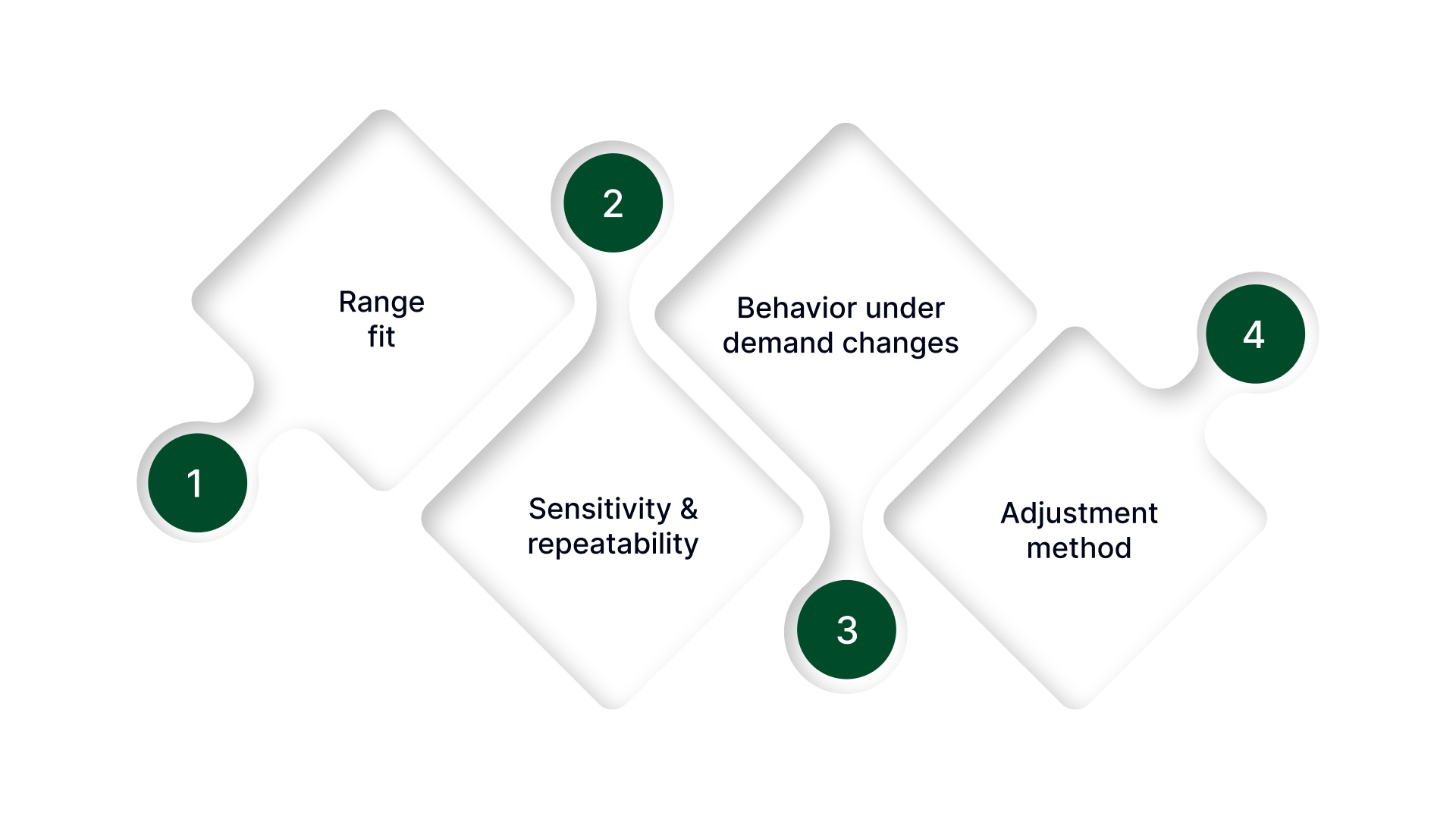
Range fit: choose a range where your normal operating setpoint sits in the usable middle, not at the edge.
Sensitivity and repeatability: the setting should be easy to dial and hold without constant touch-ups.
Behavior under demand changes: know what you can expect when downstream flow demand increases.
Adjustment method: manual-only vs. options that support more consistent, repeatable control in production.
If your application depends on stable low pressure, use On Line Controls’ regulator product pages to match your operating range and system behavior to the right model. Reach out if you want help narrowing down the best fit for your setup.
Conclusion
If you treat flow control and pressure regulation as two separate tools, the answer becomes clear much faster. Use flow control when the outcome you care about is pace. Use regulation when the outcome you care about is downstream pressure behavior.
And when a process needs both predictable motion and steady conditions under changing demand, separating those roles in the system is what keeps adjustments from turning into a constant chase.
FAQs
What is the difference between a flow control valve and a pressure regulator?
A flow control valve is used to limit or adjust the flow rate. A pressure regulator is used to maintain a target downstream pressure. One shapes how much it . The other stabilizes pressure conditions downstream.
Does a flow control valve reduce pressure?
It can. Any restriction creates a pressure drop when the flow is moving. The drop depends on the flow rate and the restriction, so it may look “fine” at idle and change under load.
Can a pressure regulator control flow?
Not directly. A regulator manages pressure. The flow you get depends on downstream demand and the restrictions in the system. If you need a specific rate, you typically add a metering or flow control device.
Do I need both a pressure regulator and a flow control valve?
Sometimes. Use both when you need consistent downstream pressure behavior and a controlled speed or rate at the point of use. This is common when demand changes but you still need repeatable results.
Where should a pressure regulator be installed in a system?
Place it where you need downstream pressure to be managed for that section of the circuit. In practice, that usually means upstream of the components you want to protect or keep stable, not at the far end after multiple restrictions.