
Introduction
In plastic tubing extrusion—particularly for medical catheters and precision automotive components—even a 1% variation in die pressure can cause up to a 2.9% fluctuation in output dimensions.
For manufacturers working with ultra-low pressures (often below 1 inch of water column), this sensitivity transforms air pressure regulation from a simple process variable into a critical quality control factor.
Even when using precision regulators engineered for exceptional stability, understanding proper verification procedures and maintenance practices ensures optimal long-term performance.
This guide covers calibration fundamentals, step-by-step verification procedures, essential maintenance practices, troubleshooting techniques, and scheduling guidelines to help you maintain dimensional consistency and prevent costly production issues.
Key Takeaways
- Verify regulators below 1 inch of water against NIST-traceable reference standards periodically
- Use reference equipment with 3:1 or 4:1 accuracy ratios for verification
- Perform visual inspections, leak detection, air quality checks, and performance monitoring regularly
- Force balance designs deliver 10-20+ years of stable, hysteresis-free performance
- Documented maintenance schedules prevent unplanned downtime and maintain product quality
Why Calibration and Maintenance Matter for Precision Regulators
The Critical Difference: Precision vs. Standard Regulation
Precision air pressure regulators operate at a completely different level than standard industrial units. Conventional regulators work at ranges starting from 5-10 psi with ±1-2% accuracy.
Precision units for tubing extrusion control pressures as low as 0.036 psi (1 inch of water) with accuracy requirements of ±0.01% to maintain dimensional tolerances.
Standard regulators use spring-loaded mechanisms that introduce hysteresis—the difference in output when approaching a setpoint from above versus below.
Precision models use non-spring force-balance mechanisms such as barometric capsules or viscostatic damping systems. These eliminate lag, providing instantaneous response to flow changes without pressure overshoot.
Direct Impact on Product Quality and Costs
The connection between regulator accuracy and product quality is quantifiable and significant:
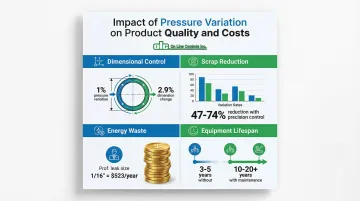
- Dimensional Control: In thin-walled medical tubing, internal air pressure controls outside diameter, inside diameter, and wall thickness. A 1% variation in head pressure causes about 2.9% variation in extruder output for materials like LDPE and PP. Pressure fluctuations cause immediate wall section variations and quality rejection.
- Scrap Reduction: Closed-loop pressure control systems with precision regulators reduce linear weight output variation by 47% to 74%, cutting material waste and rework costs
- Energy Waste: Unaddressed leaks in compressed air systems consume 20-30% of compressor output in unmaintained facilities. A single 1/16" leak at 100 psig costs about $523 annually at typical electricity rates
- Equipment Lifespan: Preventive maintenance extends precision regulator life dramatically. Quality units with proper maintenance operate reliably for 10-20+ years versus 3-5 years for poorly maintained equipment
When "No Calibration Required" Still Needs Verification
Advanced precision regulators with force balance designs and viscostatic damping show exceptional stability that minimizes drift. Some manufacturers engineer units that maintain factory calibration throughout their operational life without requiring field adjustment.
Periodic verification remains best practice for critical applications. It confirms continued accuracy and detects performance degradation early.
Verification also provides documented proof of measurement integrity—essential for medical device manufacturing under 21 CFR Part 820 and aerospace applications under AS9100 standards.
How to Calibrate a Precision Air Pressure Regulator
Safety Precautions and Preparation
Before beginning any calibration procedure:
- Completely depressurize the system and verify zero pressure
- Wear appropriate PPE including safety glasses
- Ensure the work area is clean and free of contaminants that could enter sensitive components
- Remove any sources of vibration that could affect ultra-low pressure measurements
- Verify adequate ventilation if working with pressurized systems
Required Equipment and Preparation
Essential Calibration Tools:
- Reference pressure gauge or digital manometer: Must have appropriate range and accuracy of 0.25% or better, with NIST-traceable calibration certificate
- Accuracy ratio: Reference standard should have accuracy no greater than one-third (1:3) of the tolerance on the device under test; preferably one-tenth (1:10)
- Calibration gas source: Clean, dry air or nitrogen, free from oil and particulates to ISO 8573-1 Class 1 standards
- Manufacturer specifications: Obtain tolerance data, adjustment procedures, and performance criteria specific to your regulator model
Environmental Conditions:
Ultra-low pressure calibration demands strict environmental control.
Conduct calibration in a stable temperature environment between 68-77°F with variation limited to ±1.8°F during the procedure. Isolate the calibration area from vibration sources including nearby machinery, HVAC systems, and foot traffic. Even slight tremors cause wide discrepancies in readings below 1 inch of water.
Allow the regulator to stabilize at ambient temperature for at least 30 minutes before beginning calibration. Temperature differences between internal components and the surrounding air create thermal drift that compromises measurement accuracy.
Step-by-Step Calibration Procedure
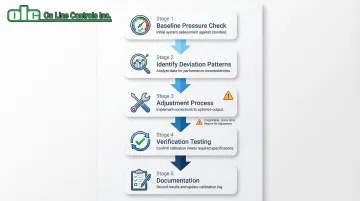
1. Baseline Pressure Check
Connect the reference gauge downstream of the regulator using clean, appropriate fittings. Gradually introduce supply pressure to the regulator input, allowing at least 5 minutes for stabilization at each test point.
Record initial pressure readings at multiple setpoints across the operating range—typically at 0%, 25%, 50%, 75%, and 100% of full scale.
Perform both upscale (increasing pressure) and downscale (decreasing pressure) sweeps to measure hysteresis. Precision regulators should show minimal hysteresis. Any difference between ascending and descending readings indicates non-linearity that affects process control.
2. Identify Deviation Patterns
Compare recorded readings against manufacturer specifications. Look for:
- Offset errors: Consistent deviation across the entire range (indicates zero adjustment needed)
- Linearity issues: Deviation that changes proportionally with pressure (span adjustment needed)
- Hysteresis: Difference between upscale and downscale readings (mechanical friction or seal issues)
3. Adjustment Process (If Applicable)
Some precision regulators have limited or no user-adjustable calibration features by design. High-quality units with force balance mechanisms—like OLC's MicroAir regulators—maintain factory calibration without field adjustment capability.
If your regulator includes adjustment provisions, follow the manufacturer's procedure exactly. Small adjustments work best, with full stabilization (minimum 5 minutes) between changes. Never force adjustment mechanisms or attempt modifications beyond documented procedures.
4. Verification Testing
After any adjustments, cycle through the full pressure range at least three complete times. Check for:
- Consistent readings at each setpoint (±0.2% or better for precision units)
- Minimal hysteresis between increasing and decreasing cycles
- Response time to flow changes (should be under 0.1 second for high-performance regulators)
- Pressure stability under varying flow conditions
5. Documentation Requirements
Maintain comprehensive calibration records including:
- Calibration date and technician name
- Reference equipment used with calibration certificate numbers and expiration dates
- Environmental conditions during calibration
- Pre-calibration and post-calibration readings at all test points
- Any adjustments made with specific details
- Pass/fail determination against specifications
- Next calibration due date
This documentation provides traceability for quality control, supports regulatory compliance, and enables trend analysis to optimize calibration intervals.
Essential Maintenance Practices
Precision regulators require less intensive maintenance than standard industrial units, but consistent attention to key areas prevents performance degradation and extends operational life. A structured maintenance approach catches minor issues before they affect production quality.
Visual Inspection and Cleaning
Monthly Visual Inspections Should Include:
- Physical damage assessment (cracks, corrosion, worn components)
- Mounting hardware verification (check for looseness or degradation)
- Air connections and fittings examination (look for signs of leaks or wear)
- Pressure gauge functionality (if equipped, verify readability and no fogging)
- Electrical connections integrity (for motorized or electronically controlled units)
Proper Cleaning Procedures:
Use clean, lint-free cloths to remove dust and debris from exterior surfaces. Avoid harsh chemicals, solvents, or abrasive materials that could damage seals, diaphragms, or precision-machined surfaces.
For units with integrated displays, use appropriate screen cleaning solutions.
If your system includes air intake filters, inspect them monthly and replace according to manufacturer schedules or when pressure differential indicates saturation. Clogged filters restrict airflow and can cause pressure instability.
Leak Detection and Prevention
Systematic Leak Checking Methods:
- Visual and auditory inspection: Listen for hissing sounds indicating escaping air at all fittings and connections
- Leak detection solution: Apply soapy water or commercial leak detection fluid to connections, looking for bubble formation
- Pressure decay test: Pressurize the system, isolate it, and monitor for pressure drop over a defined period (10-15 minutes)
- Ultrasonic leak detection: For thorough facility audits, ultrasonic detectors locate leaks in pressurized systems with high accuracy
Impact on Precision Applications:
Even small leaks compromise precision regulation. Leaks create variable downstream demand that forces constant regulator adjustment, introducing instability. In ultra-low pressure applications, minor leaks cause pressure fluctuations that directly affect product dimensions.
The economic impact is substantial. A 1/16" leak at 100 psig wastes over $500 annually, while a 1/4" leak costs more than $8,300 per year in compressed air energy.
Filter and Component Maintenance
Air Quality Management:
Precision regulators require high-purity air meeting ISO 8573-1 Class 3 standards for particles and oil.
Contamination is a leading cause of failure—dirt, rust, or foreign material can clog fixed orifices or valve seats, causing erratic regulation, unstable set pressures, or complete failure.
Install mist separators (0.3 µm filtration) and air filters upstream of precision regulators. Check filter elements monthly for contamination or saturation, and drain moisture from filter bowls regularly (daily in humid environments).
Seal and Diaphragm Care:
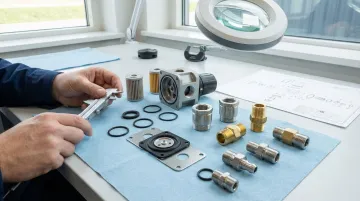
Rubber components including diaphragms, O-rings, and seals have finite lifespans. Manufacturers recommend replacement every three years, though actual service life depends on operating conditions.
Watch for signs of seal wear:
- Gradual pressure drift over time
- Erratic pressure behavior or slow response
- Visible cracking, hardening, or distortion during inspection
Plan preventive replacement based on manufacturer recommendations rather than waiting for failure. For critical applications, rebuild annually with new seals and springs.
Performance Monitoring and Record Keeping
Establish Baseline Metrics:
When your regulator is new or freshly calibrated, record comprehensive baseline performance data:
- Standard pressure readings at standard setpoints
- Response times to flow changes
- Pressure stability under various load conditions
- Any characteristic behaviors specific to your application
Trend Analysis Value:
Regularly compare current performance against baselines to detect gradual drift or degradation before it affects production. Monthly performance checks create a data history that reveals patterns invisible in single measurements.
Maintain a maintenance log documenting all inspections, calibrations, adjustments, and component replacements. This record supports regulatory compliance, helps optimize maintenance intervals, and provides valuable troubleshooting information when issues arise.
High-quality precision regulators like OLC's MicroAir units feature stable, hysteresis-free designs that show minimal drift over time, reducing maintenance burden significantly compared to standard units.
Troubleshooting Common Issues
Early problem detection prevents larger failures and costly production disruptions.
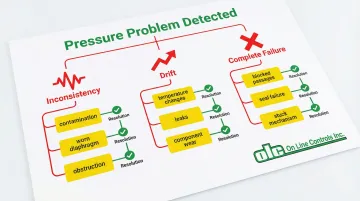
Pressure Inconsistency Symptoms
Fluctuating output pressure shows up as inability to maintain stable pressure at setpoint, with readings varying even under constant input conditions. Common causes include:
- Contaminated air supply with moisture or particulates
- Worn diaphragms that have lost flexibility
- Internal obstruction from debris accumulation
- Undersized regulator for application flow requirements
Slow response to setpoint changes means the regulator takes excessive time to reach new pressure after adjustment.
This typically results from clogged fixed orifices due to moisture or foreign matter, or from degraded damping systems in precision units.
Pressure Drift Issues
When output pressure gradually increases or decreases over hours or days despite constant input and setpoint, investigate systematically:
Environmental Factors:
- Temperature changes affect internal components and can shift set pressure
- Verify ambient temperature stability in the installation area
- Check for heat sources (motors, process equipment) near the regulator
System Integrity:
- Inspect for air leaks downstream that create variable demand
- Verify supply pressure stability—upstream fluctuations pass through the regulator
- Check for proper vertical mounting (critical for units with fluid damping systems)
Component Wear:
- Seal degradation allows internal leakage that causes drift
- Spring fatigue in spring-loaded designs changes force balance over time
- Internal corrosion or debris accumulation affects valve operation
Complete Failure Scenarios
No output pressure or inability to adjust pressure signals severe malfunction:
- Blocked air passages from contamination
- Frozen or damaged internal components
- Complete seal failure preventing pressure buildup
- Stuck adjustment mechanism from corrosion or debris
Hunting or oscillation creates regular pressure fluctuations around the setpoint, typically with audible humming or buzzing. Causes include:
- Oversized regulator orifice for the application
- Turbulent flow from upstream piping (elbows, valves too close to regulator)
- Insufficient downstream volume creating feedback
- Harmonic resonance with nearby equipment
When to Seek Professional Service
Contact the manufacturer or qualified service technician when:
- Complex internal adjustments are required beyond user-serviceable procedures
- Component replacement involves parts not designated as user-replaceable
- Calibration remains outside acceptable tolerances despite proper adjustment attempts
- Any safety-related concerns arise (pressure relief failure, structural damage)
- The regulator is critical to product quality or safety and you lack confidence in repair procedures
Calibration and Maintenance Schedule
Establishing the right maintenance schedule depends on your specific application requirements and operating conditions. Most precision regulators benefit from a structured inspection routine that scales with usage intensity and environmental factors.
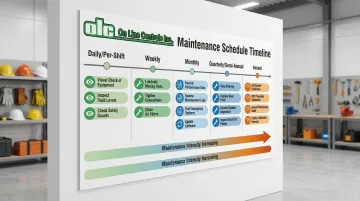
Recommended Maintenance Frequency
Daily/Per-Shift Checks:
- Visual inspection for obvious damage or leaks
- Verify pressure gauge readings are within expected range
- Listen for unusual noises or behavior
- Check mounting security and connection integrity
Weekly Tasks:
- Detailed leak inspection of all connections using detection solution
- Filter condition check and moisture drainage (if applicable)
- Performance comparison against baseline metrics
- Document any deviations or concerns
Monthly Inspections:
- Thorough visual and functional inspection
- Clean exterior and accessible components
- Review performance trends for gradual changes
- Confirm environmental conditions remain appropriate
Quarterly or Semi-Annual Tasks:
- Formal calibration verification against reference standards
- Detailed performance testing across full operating range
- Review maintenance records for patterns or recurring issues
- Plan component replacements based on wear indicators
Annual or As-Needed:
- Comprehensive calibration (if adjustable design requires it)
- Seal and component replacement per manufacturer schedules
- Professional service evaluation for critical applications
- Complete documentation review and interval optimization
These baseline intervals work for most applications, but your specific conditions may call for adjustment.
Adjusting Frequency Based on Conditions
Increase Inspection Frequency When:
- Continuous high-volume operation: 24/7 operation accelerates wear compared to intermittent use
- Harsh environments: High temperature, humidity, or contamination accelerate component degradation
- Critical applications: Medical device manufacturing, aerospace, and regulated industries require stricter schedules
- History of issues: Previous failures or frequent adjustments indicate need for closer monitoring
On the other hand, you may extend intervals when conditions support it.
Consider Extended Intervals When:
- Historical data shows consistent performance well within tolerances
- High-quality regulators with documented stability operate in controlled environments
- Risk assessment indicates low probability of measurement error impacting product quality
- Regulatory requirements allow risk-based interval optimization per ISO 10012
Note: Some precision regulators, like On Line Controls' MicroAir units, are designed for stable, hysteresis-free operation that requires minimal calibration intervention. Always consult your manufacturer's specifications to determine if your equipment allows for extended intervals based on design characteristics.
Frequently Asked Questions
How to tell if an air pressure regulator is bad?
Key indicators include inability to maintain set pressure, visible leaks, erratic pressure fluctuations, or physical damage like cracked housings and corroded components. Pressure drift beyond your application's acceptable tolerances also signals replacement needs.
Do precision air pressure regulators need calibration?
High-quality precision regulators like OLC's MicroAir units are designed for exceptional stability with factory-set accuracy throughout their lifespan—no calibration required. For critical applications in regulated industries, periodic verification against reference standards provides documented proof of measurement integrity.
How often should I inspect my air pressure regulator?
Perform daily visual checks for leaks or damage, weekly detailed inspections including leak testing, and quarterly formal verification for precision applications. Medical tubing and critical applications require more rigorous schedules than general industrial use.
What causes pressure drift in air regulators?
Common causes include diaphragm or seal wear, temperature fluctuations, air supply contamination, and spring fatigue. Environmental factors like vibration, improper mounting, and internal corrosion also contribute to drift.
Can I calibrate an air pressure regulator myself?
Basic verification can be performed by trained personnel with proper reference equipment (NIST-traceable standards), environmental controls, and documented procedures. Complex adjustments should be done by qualified technicians following manufacturer procedures to avoid damage.
What's the difference between calibration and adjustment?
Calibration compares regulator output against a reference standard to verify accuracy. Adjustment changes regulator settings to correct deviations found during calibration. You can calibrate without adjusting, but only adjust after calibration reveals deviations exceeding acceptable tolerances.